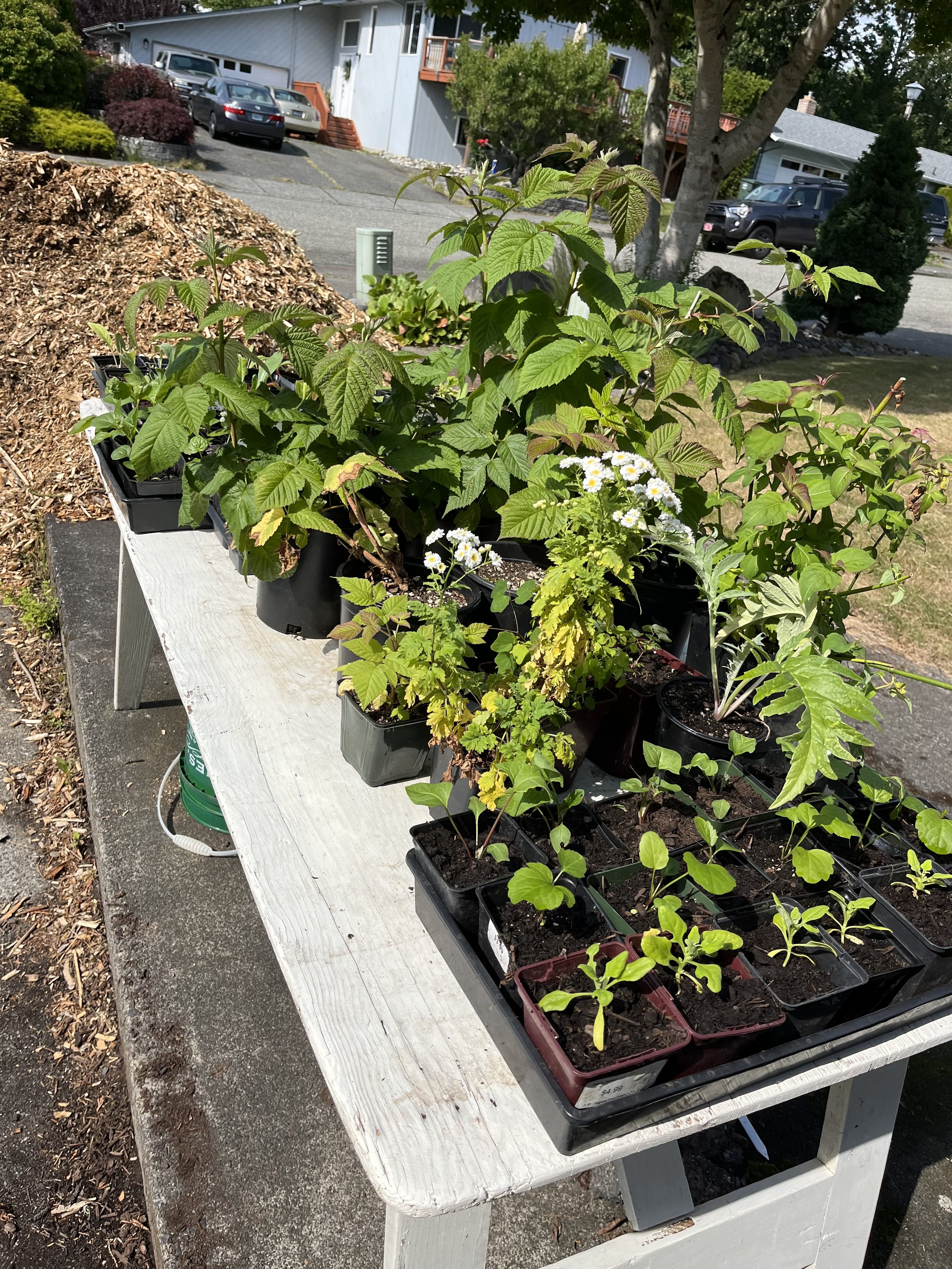
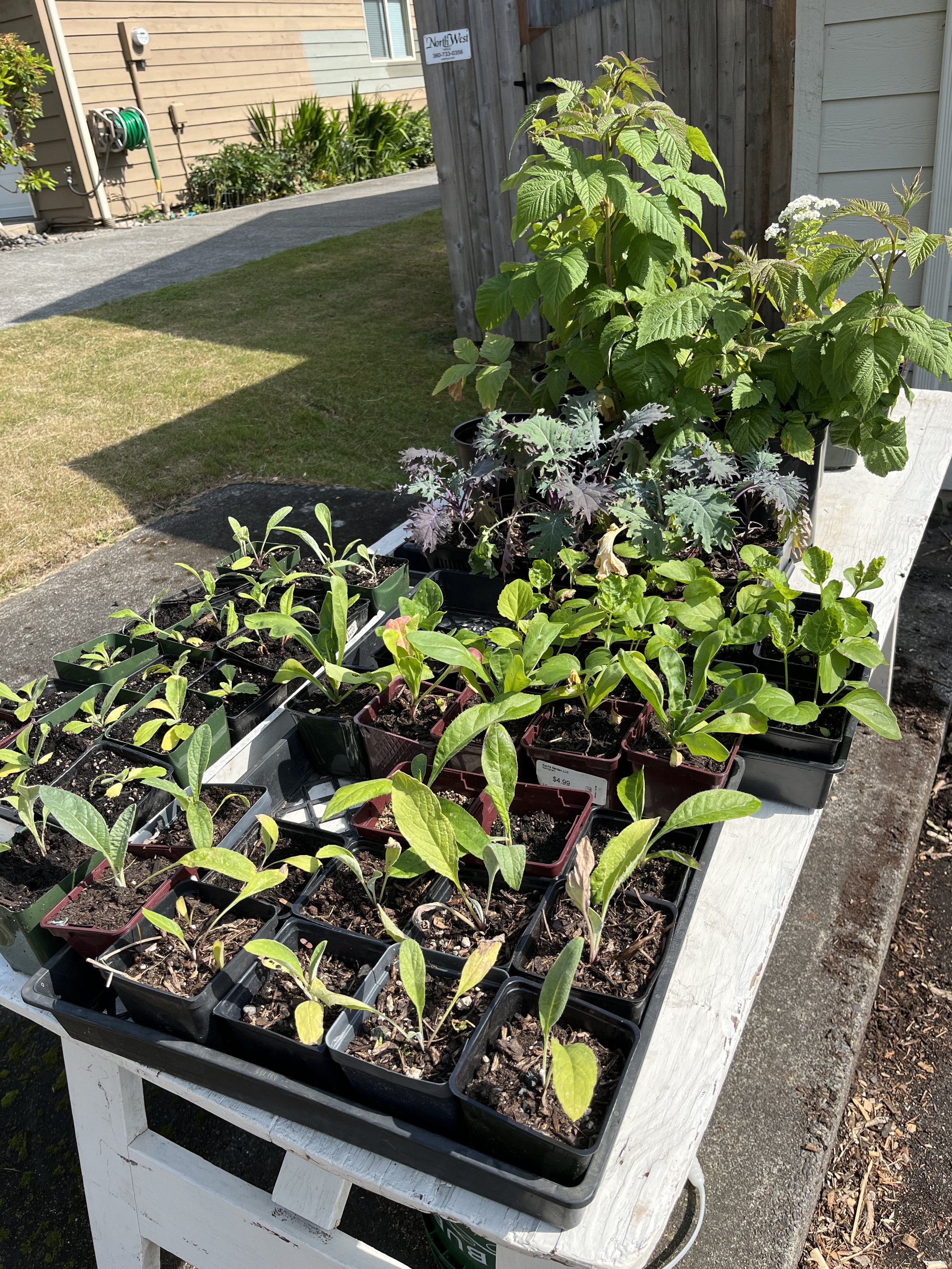
In my small home nursery, I focus on perennial vegetables, and other edible, medicinal, and pollinator plants. I find all these plants to be excellent additions to the home-scale permaculture food and medicine garden.
These plants will be available at my Perennial Vegetable Class (April 25), and any other events at my garden this year.
2026 Inventory and Plant Information:
Inventory Updated 4/11/26
Medicinal Herbs:
Motherwort: Also easy to grow and will also spread by its copious number of seeds. Another excellent pollinator plant. This plant has a very bitter taste, so is best used in tincture form if you wish to use it medicinally. It can help support cardiac health as well as mental focus and anxiety.
Agrimony: Clumping perennial herb with interesting leaves and tall yellow flower spikes. Pleasant in tea, it aids urinary health and supports the immune system.
Hops: Another bitter herb, its taste is well known in IPA beer. This sprawling vine needs support to grow up, and is also a perennial vegetable when very young (edible young shoots, raw or cooked). The medicinal part are the dangling strobiles with dusty yellow lupulin. Their action is as a digestive bitter but also a sedative herb.
Elecampane: The root is used to get phlegmy congestion moving out of your body. It makes huge leaves and tall happy yellow flowers that insects love. Easy to divide and will spread some by seed as well.
Mojito Mint: My favorite mint for tea, or mojitos! Really a joy to see this covered with pollinators when in bloom. Replace your lawn with mint, its spreading habit can be a big benefit.
Yarrow: Easy to grow in a variety of environments. Yarrow is helpful for fever, congestion, and topically as a wound dressing to help stop bleeding. Another excellent plant for pollinators. Lovely delicate foliage gives reason behind one of its older common names, “Venus’s Eyebrows”
Oregano: A well known culinary herb but also a powerful anti-bacterial and anti-viral. If you let it go to flower it will be covered in happy bees, flies, wasps, and butterflies.
Perennial Vegetables:
Sochan: AKA Cut Leaf Rudbeckia. This was an important leafy green for the Cherokee people and other Indigenous peoples in the eastern part of North America. I learned about it on a podcast by Aaron Parker of Edgewood Nursery. It’s easy to grow and makes very tall, pretty yellow flowers.
Maximillian Sunflower: A close relative of Sunchoke, with the same type of taste and abundance. This plant doesn’t spread as rapidly though, but does clump out larger each year if allowed to.
Groundnut (Apios americana): Another important food for Indigenous people, native to the eastern part of North America. This is neat plant because it’s a legume but the part you eat are the tubers, not the bean. It makes lovely mauve flowers in our climate but I’ve never seen it mature to seed.
Lovage: Imagine celery, but 15 feet tall and way stronger tasting, and you have Lovage! I consider it more to be used as an herb because the celery taste is so concentrated. But it is an excellent pollinator plant as well that produces copious biomass for your garden, as well as large hollow flower stems for overwintering insects.
Solomon’s Seal: Maybe not my favorite edible, but it is edible as a vegetable when the young shoots emerge. A gorgeous shade plant regardless.
Cow Parsnip: An important food for Indigenous people of the Pacific Northwest, but requires some knowledge and special treatment. A delicious vegetable in the spring and host for several species of butterflies.
Mauka (Mirabilis expansa var. rojo): A very interesting and uncommon root vegetable native to South America. It has been cultivated for generations but was only made known to science in the 1960s. It has a lot of promise as a root crop in our PNW climate, and tastes nearly indistinguishable from potatoes.
Orange Daylily: Lovely plant with edible flowers and flower buds. Warning: All parts of day lily (and true lily) are toxic to cats! So if there is any chance your cat could get a hold of your lily inside or outside, please do not grow this plant.
Fuki: A very large leafed colony forming plant that loves wet shade. I have not eaten it because of mixed reviews, but I find it worth growing for the “Totoro” factor and biomass mulch use.
Herbal Products (varies from year to year):
Salves: Arnica, Calendula, Cottonwood (all salves are herbs, olive oil, and beeswax only)
Tinctures: Hawthorn Flower+Berry, Elecampane, Blue Elderberry, Motherwort, St. John’s Wort, Hops, Echinacea, (tinctures are plant matter in alcohol, typically vodka)
Selection of Herbal Teas: All herbs grown without pesticides or wildcrafted
Thank you for your support!
Herbs have been used effectively for centuries, but they are not regulated by the Food & Drug Administration. Plant Friends’ products and statements have not been evaluated or approved by the FDA. These products are not intended to diagnose, treat, cure, or prevent any disease. Consult a qualified health practitioner before using these products, especially if you have any serious medical conditions, are pregnant, lactating, or taking any medication.